

ASBESTOS - THE HIDDEN RISK
INSIDE NEW YORK’S BUILDINGS
CONTENT PREPARED AND SERVICES PROVIDED BY FULL-SERVICE NYC-BASED ARCHITECTURAL PRACTICE LENKA ILIC ARCHITECTURE D.P.C.

Asbestos has been in use from the late 1800s till 1987 and remains one of the most persistent environmental hazards in New York City. Even after decades of regulation, nearly 70% of NYC buildings still contain asbestos in some form. For anyone planning a renovation, alteration, or demolition, understanding how asbestos is managed is essential for both safety and compliance. To be exact, NYC apartment renovations to buildings in NYC constructed after April 1, 1987 are exempt from asbestos certification requirements of the DEP, as per NYC DOB website.
What Is Asbestos and Why It Was Used
Asbestos is a naturally occurring mineral known for its heat resistance, tensile strength, and durability. For much of the 20th century, it was widely used in asbestos products across the construction industry, including:
- Pipe, boiler, and asbestos insulation;
- Asbestos ceiling tiles and floor systems;
- Textured paints and patching compounds;
- Adhesives and vinyl flooring.
Because of these properties, asbestos was viewed as a "miracle material" in architecture - until its severe health effects became known.
Why Asbestos Is Dangerous

When left undisturbed, asbestos may pose minimal risk. But once materials are cut, sanded, or damaged, asbestos fibers can become airborne and easily inhaled. These microscopic fibers can cause irreversible damage to the lungs, including:
- Mesothelioma - a rare, aggressive cancer affecting the lung lining;
- Asbestosis - a chronic lung disease causing tissue scarring;
- Lung cancer - often emerging decades after exposure.
Even brief exposure to asbestos fibers can lead to long-term health issues, which is why NYC enforces strict asbestos abatement laws.
Where Asbestos Is Found in NYC Buildings
According to the New York City Department of Environmental Protection (DEP), asbestos-containing material (ACM) is most often found in:
- Thermal system insulation at building risers;
- Mechanical spaces;
- Wall and ceiling plaster;
- Asbestos in floor tiles and adhesives.
Many iconic New York buildings still contain asbestos embedded in their structural and fireproofing systems.
How to Approach a Project That Might Involve Asbestos
When beginning a renovation or construction project in New York City, it's critical to follow regulations.
Step 1 - Consult with an Architect First
Start by retaining an architect who can help define your design concept and the areas you want to modify. An experienced architect understands where asbestos issues commonly arise and can anticipate which parts of your building are most likely to be disturbed.
Step 2 - Verify Your Building's Age
If your property was built before 1990 there's a high likelihood that asbestos is present somewhere in the structure, whether in asbestos insulation, or floor and ceiling assemblies. This foresight allows for preventive planning and avoids last-minute project disruptions. Even though the NYC DOB assumes buildings constructed after 1987 are free of asbestos, it is good practice to be cautious with any NYC apartment alteration for buildings constructed before 1990, as some NYC co-op and condo boards require asbestos sampling for these as well.
Step 3 - Sampling and Testing
Engage a DEP Certified Asbestos Investigator to sample the areas that will be disturbed during construction of your NYC apartment renovation scope of work per your Architect’s drawings, such as walls, ceilings, or flooring being removed or replaced. Testing selectively keeps costs and timelines manageable.
Step 4 - Plan Based on the Results
If testing reveals asbestos, your architect and environmental consultant will outline a strategy, either containment or abatement, depending on the scope. In some cases, a limited filing such as an ACP-5 (where only limited areas are abated by a licensed asbestos contractor) can allow the project to continue smoothly without escalating into a full-scale remediation. ACP-5 asbestos report is filed with NYC DOB for NYC apartment renovations if there is no asbestos abatement proposed or asbestos abatement is proposed up to 12 linear feet (typical for pipe insulation) and/or 10sf in area (typical for mastic under vinyl tyle in small closets). If more complex asbestos abatement is proposed, ACP-7 report shall be filed with DEP. Only licensed asbestos contractors may abate asbestos. A contractor without a license for asbestos abatement may not be engaged.
Step 5 - Proceed with Experience
If asbestos abatement or containment is required, work with an architectural and construction team that understands both, technical and regulatory aspects. An architect familiar with NYC's DEP and DOB processes can guide coordination, sequencing, and compliance, ensuring that your project stays on track.
Preferred design approach is to avoid disturbing asbestos and encapsulate it during construction if needed. Common design solutions are:
- Example 1: install new floor finish over existing floor finish where asbestos was identified in existing tile mastic, if co-op/condo board rules allow.
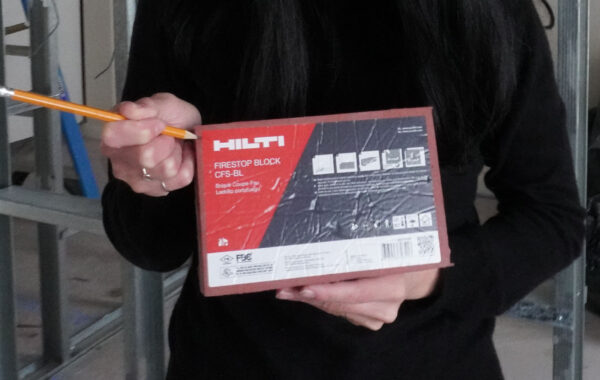
- Example 2: use Hilti fire-stop Mortar CP 637 to encapsulate asbestos at fire-stop openings where building risers wrapped in insulation containing asbestos exists.


Example 1, Postwar 1962 apartment building located in Lenox Hill, asbestos in vinyl tile mastic, in carpet mastic was identified, as well as below the door saddle as mastic leaked during the original installation.


Example 2, Postwar 1965 co-op building located in Kips Bay, post-demo condition indicating building risers pipe insulation containing asbestos and post fire-stopping systems installed while not disturbing asbestos.
This approach minimizes disruption, keeps costs predictable, and protects both occupants and construction teams. Failure to comply with regulations can result in penalties of $1,200-$10,000 per violation.
How to Verify an Asbestos Sampler or Abatement Contractor in NYC
Finding a qualified professional is critical. To ensure compliance and avoid liability:
- Check the DEP's list of Certified Asbestos Investigators;
- Verify contractor licenses through the New York State Department of Labor;
- Confirm laboratory credentials under the New York State Department of Health's Environmental Laboratory Approval Program (ELAP);
- Request a contractor's violation history directly from the DEP (available within 48-72 hours).
These steps ensure your project team meets all required NYC asbestos abatement standards. Your architect shall advise and guide you through this step of your NYC apartment renovation project.
Homeowners and Tenants: What You Should Know
If you live in or manage an older property with asbestos in homes or mixed-use buildings:
- Do not disturb any material that may contain asbestos, including asbestos ceiling tiles or asbestos floor tiles;
- Hire a DEP-certified investigator to test materials before renovation;
- Consult licensed abatement professionals for abatement.
Architectural Responsibility and Safe Design
When we work on apartment renovations in NYC, our approach to asbestos in buildings reflects our broader philosophy: safety, integrity, and regulatory compliance are integral to thoughtful design. Whether coordinating pre-construction assessments or navigating DOB filing procedures, our team ensures each project meets the required standard of health and environmental stewardship.
By identifying asbestos products and hazardous conditions early, we help clients:
- Prevent project delays;
- Avoid costly fines;
- Follow NYC DOB and NYC DEP protocols related to workers and occupants.
Considering a Renovation or Demolition in NYC?
If you're planning work on a property built before 1989, contact us before starting. We can help coordinate your asbestos survey, connect you with licensed professionals, and guide your project through the necessary DEP and DOB clearances.
Contact us to discuss your upcoming apartment renovation or adaptive reuse project in NYC.
Call Us Now →